
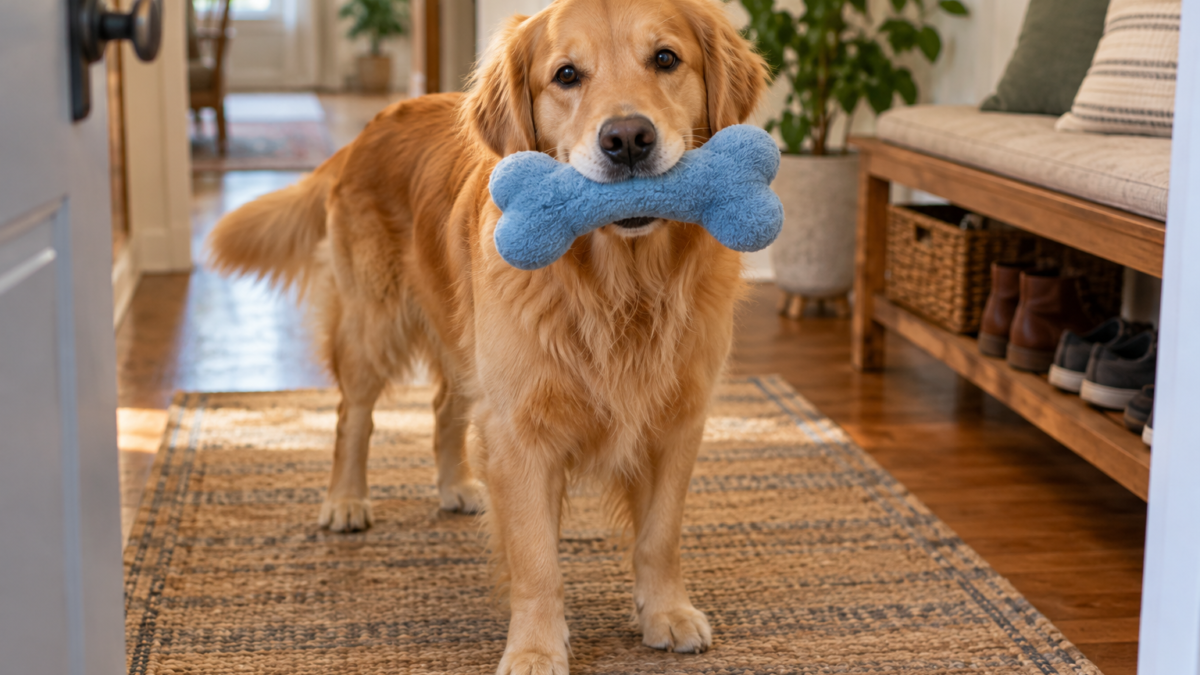
Why does my dog bring me a toy when I come home? You unlock the front door after a long workday, set down your keys, and there is your dog—tail sweeping the floor, soft eyes looking up, and a favorite plush toy clutched proudly in their jaws.
You smile and reach down to take it, but the moment your fingers brush the fabric, your pup takes two quick steps backward, wiggling excitedly while holding on tight. You are welcome to admire the prize, but taking it seems entirely off the table.
If this ritual sounds familiar, you are not alone. Countless pet parents wonder whether their companion is offering a heartfelt gift, asking for an immediate game of fetch, or experiencing overwhelming reunion energy. As veterinary behaviorists note, there is rarely just one reason—canine greeting rituals are layered with evolutionary history, emotional regulation, and learned communication.
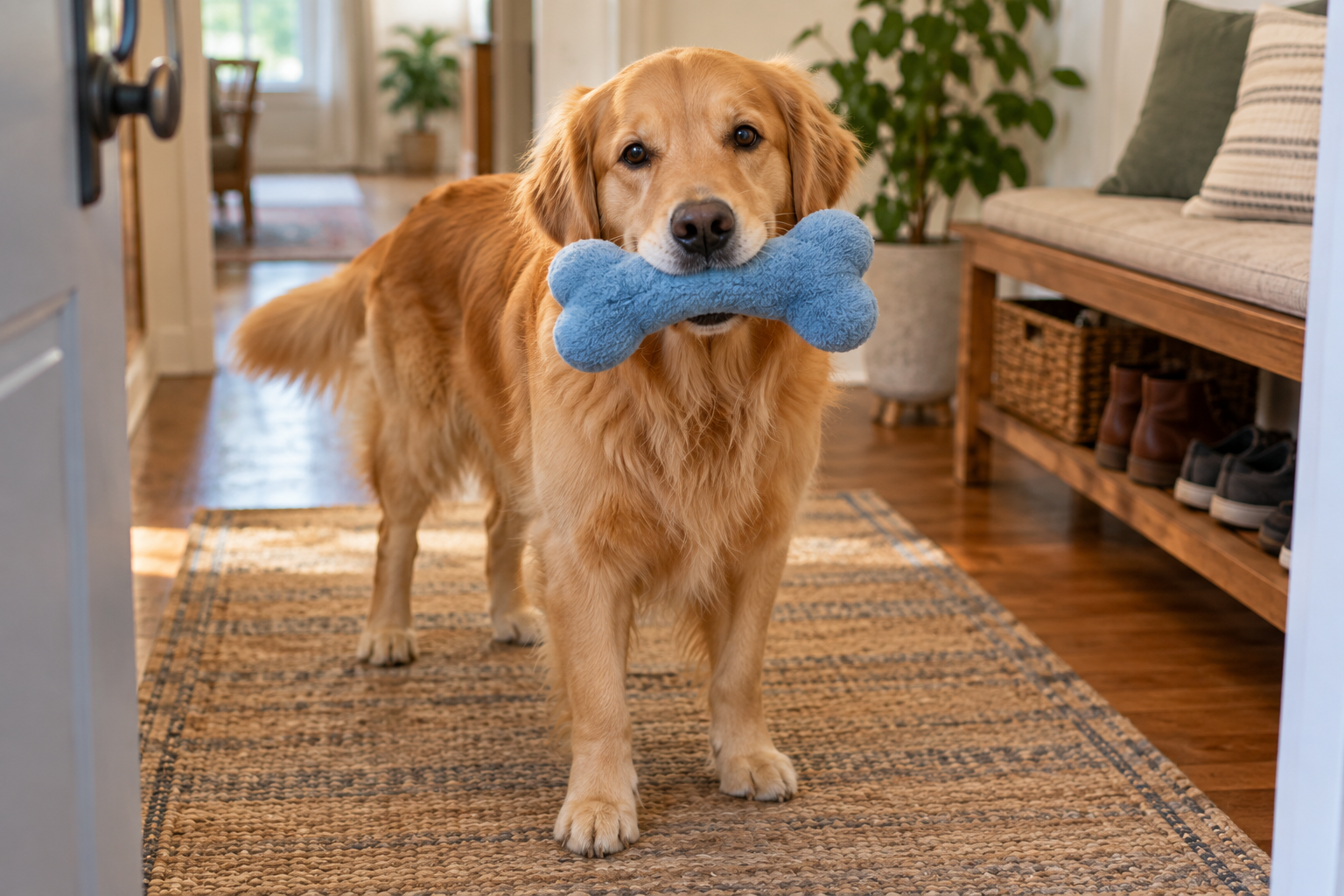
Table of Contents
Why Does My Dog Bring Me a Toy? 5 Behavioral Explanations
1. Genuine Play Anticipation and Predictable Routines
Dogs are masters of contextual conditioning. If arriving home typically leads to a few minutes of tug-of-war or outdoor fetch, your dog quickly learns that your presence signals play. Grabbing a toy before you even cross the threshold is an active display of joyful anticipation.
For high-drive working and sporting breeds like Golden Retrievers, Labradors, and Border Collies, carrying an object is second nature. Presenting their favorite toy becomes their primary way of inviting you to participate in an interactive reunion game.
2. Emotional Regulation and Displacement Behavior
Reunion after hours of solitude triggers a sharp surge in dopamine and arousal. While exciting, this intense emotional spike can be difficult for some dogs to manage peacefully without jumping, nipping sleeves, or vocalizing incessantly.
Clinical animal behaviorists often classify this mouth-filling habit as a healthy displacement activity. According to the PetMD veterinary behavior guide, clenching a plush toy provides calming proprioceptive feedback, channeling exuberant energy into a harmless physical outlet.
3. Positive Reinforcement and Human Attention
Think back to the very first time your puppy greeted you with an oversized squeaky toy. Did you laugh, speak in a warm high-pitched voice, or immediately shower them with ear scratches?
That immediate affection acted as powerful operant conditioning. Even if you don’t throw the toy, your pup knows that holding an item in their mouth unlocks instant smiles and dedicated eye contact. For social pack animals, that focused acknowledgment is deeply rewarding.
4. Pack Affection and Social Greeting Gifts
While dogs do not share human concepts of birthday presents, sharing possessions is an established greeting gesture in canines with close social bonds. Approaching you with a prized object demonstrates openness and trust.
By bringing their cherished possession straight to your feet, your dog is essentially saying, “You are home, this is my favorite item, and I want to share this happy space with you.” Explore more fascinating insights into canine companionship in our Pets & Animal Stories archive.
5. Instinctual Retrieval Drive and Oral Comfort
Centuries of selective breeding have shaped canine genetics, particularly among gundogs and herders who were bred to carry objects gently with a “soft mouth.” For these dogs, having an item between their teeth simply feels comforting and instinctive.
When searching for reasons why does my dog bring me a toy, remember that instinct plays a quiet yet powerful background role. Holding something familiar helps satisfy innate working drives in a domestic living room.
Why Bring the Toy Over, Then Refuse to Let Go?
One of the most comical aspects of this ritual is the classic “look, but don’t touch” dance. Your dog prances over, shows you the toy, and immediately dodges when you attempt to take it.
This does not mean your dog is being stubborn or disobedient. As explained by veterinary clinicians at Vet Help Direct canine clinical insights, parading an item without releasing it is a recognized canine behavior to invite engagement without surrendering control.
To your dog, your reach looks like the opening move in a thrilling game of keep-away. If you step forward, they dart back—a game they find infinitely entertaining!
How to Respond Calmly Without Starting a Chase Game
If you don’t need the item back, the simplest approach is to admire it politely without snatching. Greet your dog in a calm, soothing voice and stroke their neck or chest while they keep their toy.
Turning every doorway greeting into a forced surrender lesson can create unnecessary friction. Letting your dog hold their comfort toy allows their initial adrenaline rush to dissipate naturally over 60 to 90 seconds.
Discover complementary tips for keeping peaceful household routines in our practical helpful pet care guides.
Step-by-Step: Teaching a Positive Trade Routine
When your dog picks up a forbidden item—such as a remote control or a shoe—chasing them or wrestling it from their jaws often escalates into possessive guarding. Instead, rely on proactive trade training.
The American Kennel Club (AKC) trade training guide emphasizes trading high-value treats for toys during calm practice sessions. Follow this reliable four-step sequence:
- Prepare High-Value Rewards: Keep smelly, tasty treats (like small bits of cheese or cooked chicken) in a sealed jar near the entryway.
- Offer the Swap: When your dog approaches with an object, place the treat right in front of their nose without reaching for the toy.
- Mark and Reward: As soon as your dog drops the toy to enjoy the treat, say a cheerful marker word like “Yes!” and feed the treat.
- Return the Toy (When Safe): If the item is a safe dog toy, hand it right back after they finish the treat. This teaches your dog that giving up an item does not mean losing it forever.
When Greeting Habits Become Resource Guarding
While enthusiastic parade greetings are completely harmless, warning signals should never be ignored. If your dog exhibits stiff body posture, freezes, shows whites of their eyes (whale eye), or growls when holding an item, this points toward emerging resource guarding.
Never punish or shout at a growling dog. A growl is valuable communication telling you they feel threatened. Step back calmly and consult an accredited, certified professional dog trainer (CPDT-KA) or a board-certified veterinary behaviorist (DACVB) for a personalized behavior modification protocol.
Scientific Sources & Veterinary References
- PetMD: Why Do Dogs Bring You Toys When You Get Home? — Veterinary behavioral review on greeting arousal, canine excitement, and oral displacement.
- Vet Help Direct: Clinical Guidance on Canine Toy Presenting — Analysis of interactive parading, keep-away dynamics, and pack communication.
- American Kennel Club (AKC): How to Teach Your Dog to Trade Items With You — Certified positive reinforcement training protocols for safe item release.