
A patch of missing bean leaves can turn an ordinary morning in the garden into a small wildlife mystery. If a stocky brown animal has been visiting your yard, you may be wondering: what do groundhogs eat?
When considering what do groundhogs eat, they feed mainly on plants. If you ask what do groundhogs eat daily, grasses, clover, leafy vegetation, garden crops, and some fruit all appear on the menu. What they choose changes with the season and whatever is growing nearby.
That helps explain why a vegetable patch can attract their attention. To a groundhog, it may be a convenient place to find food close to shelter.
Here is a closer look at their diet to answer what do groundhogs eat, their garden habits, and practical ways to protect plants without treating every wildlife visit as a crisis. If you want to fully understand what do groundhogs eat, exploring their seasonal choices is key.
Table of Contents
What Do Groundhogs Eat in the Wild?
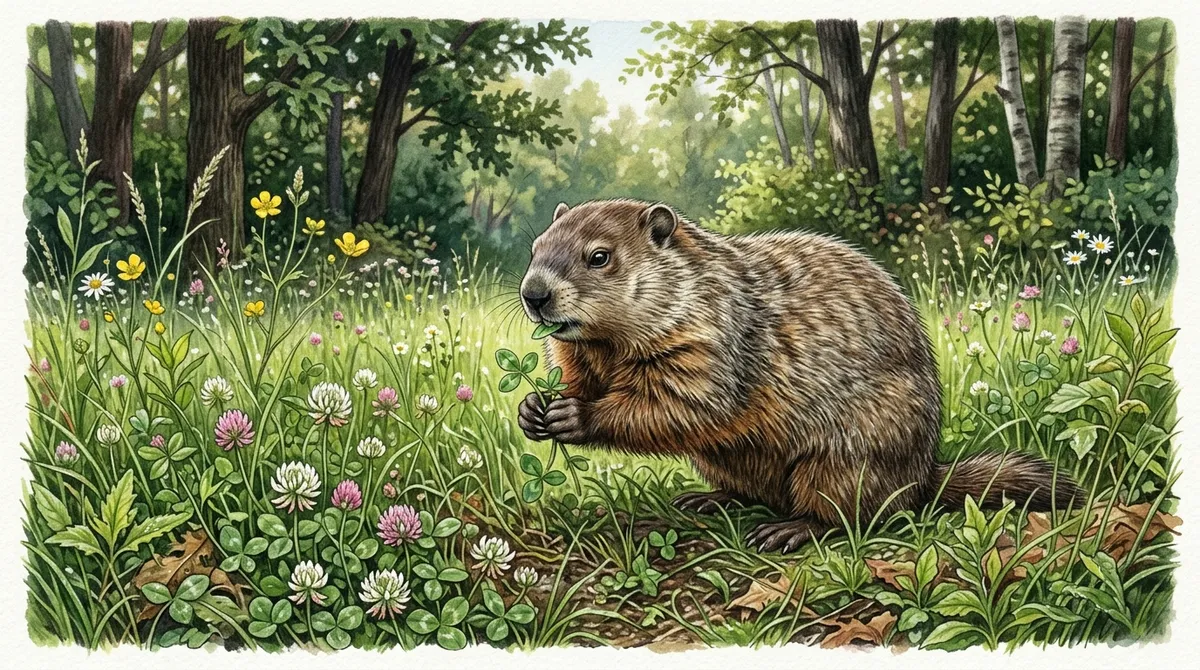
When asking what do groundhogs eat in the wild, the answer is a wide range of plant material. Groundhogs, also called woodchucks, eat mainly vegetation.
Rutgers University describes their food choices as flexible: local availability, the season, and individual preferences all play a part. Clover is one example of a plant they favor in spring.
Their everyday menu of what do groundhogs eat can include:
- Grasses and tender plant shoots.
- Clover and other leafy plants.
- Wild and cultivated vegetables.
- Available fruit.
Rather than following a fixed menu, a groundhog makes use of suitable food within reach. A field edge, a grassy clearing, and a garden can offer different choices.
Groundhog Foods at a Glance
| Food group | Examples | Where it may be available |
|---|---|---|
| Grasses and leafy plants | Grass, clover, dandelion greens | Lawns, fields, and open edges |
| Garden vegetables | Beans, peas, carrots, and corn | Vegetable gardens and cultivated land |
| Fruit | Apples and pears | Orchards, gardens, and places with fallen fruit |
| Other plant growth | Shoots and seasonally available vegetation | Mixed grassy and wooded habitats |
These are examples of what do groundhogs eat, not a feeding plan. Finding a food on the list is not a reason to leave it out for wildlife.
Pennsylvania’s wildlife agency lists grasses, clover, dandelion greens, garden vegetables, and autumn fruit among the foods woodchucks eat.
Why Do Groundhogs Eat Garden Plants?
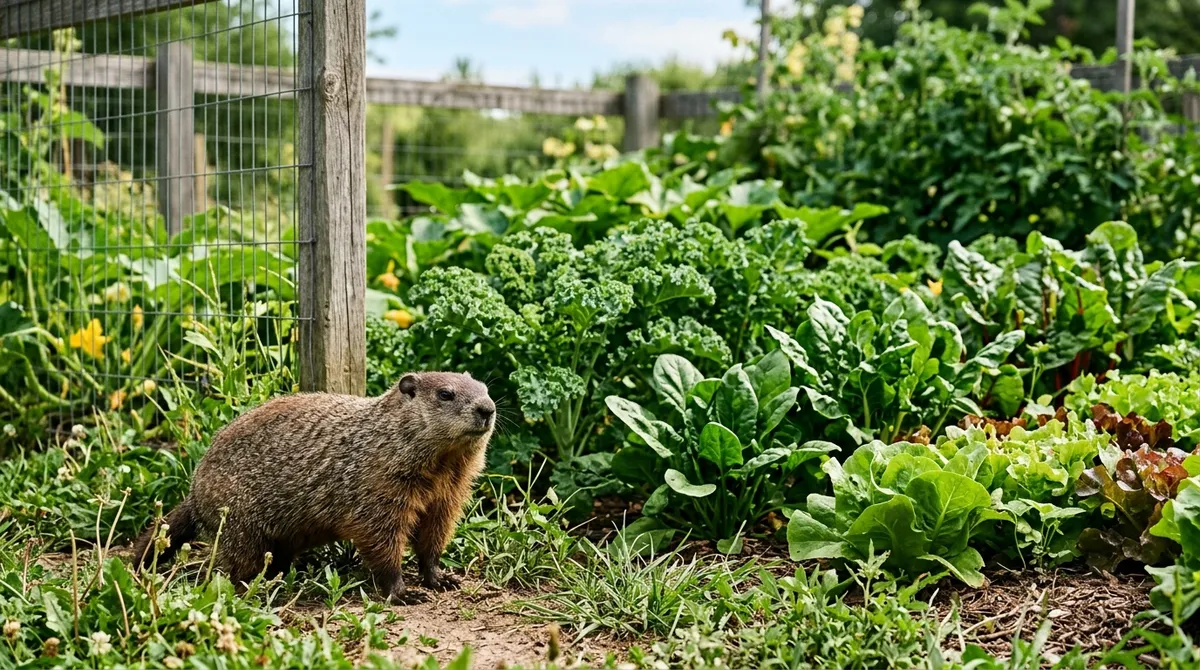
Because what do groundhogs eat includes vegetables, a garden brings many edible plants together in one small area.
The University of Maryland Extension notes that groundhogs can cause problems in vegetable and flower gardens. Missouri’s Department of Conservation also identifies peas, beans, and corn as foods they favor.
For a gardener, the useful question is therefore not just “What do groundhogs eat?” It is also “Which parts of my garden are easy to reach?”
Look at the space around your planting beds. Are there gaps beneath the fence? Does dense vegetation lead right up to the vegetables? Is produce being left on the ground?
Those observations give you something practical to work with before buying a product or changing the entire garden.
Missing plants alone do not identify the visitor. If you have not seen the animal, avoid assuming every damaged leaf is a groundhog’s work.
How Their Diet Changes With the Seasons
Spring: Fresh Plant Growth
Rutgers describes clover as a favored spring food. As new vegetation becomes available, groundhogs have access to fresh growth around their habitat.
What appears in your yard will depend on the plants growing there. A lawn with clover offers a different selection from a newly planted vegetable bed.
Summer: A Wider Choice of Plants
Grasses, leafy growth, and cultivated crops can all be available during the growing season.
This is a useful time to check garden barriers regularly. A small opening that went unnoticed before planting may matter once the plants inside become accessible.
Fall: Available Fruit and Other Food
Pennsylvania’s Game Commission includes apples and pears in the woodchuck’s fall diet. If you are wondering what do groundhogs eat to prepare for winter, fruit is often on the list.
Groundhogs also prepare for winter hibernation. Their feeding and seasonal behavior are connected, but the timing varies with location and conditions.
Winter: Hibernation
Groundhogs hibernate, drawing on stored body fat rather than continuing their normal summer feeding routine.
A quiet winter yard does not necessarily mean a nearby burrow has been permanently abandoned.
Are Groundhogs and Woodchucks the Same Animal?
Yes. Groundhog and woodchuck are common names for the same species, Marmota monax.
That is why reliable wildlife guides may use either name. Searching for “woodchuck diet” can lead you to information about the same animal you know as a groundhog.
They belong to the squirrel family, although their sturdy build and ground-based habits can make that connection less obvious.
Do Groundhogs Live Near Their Food?
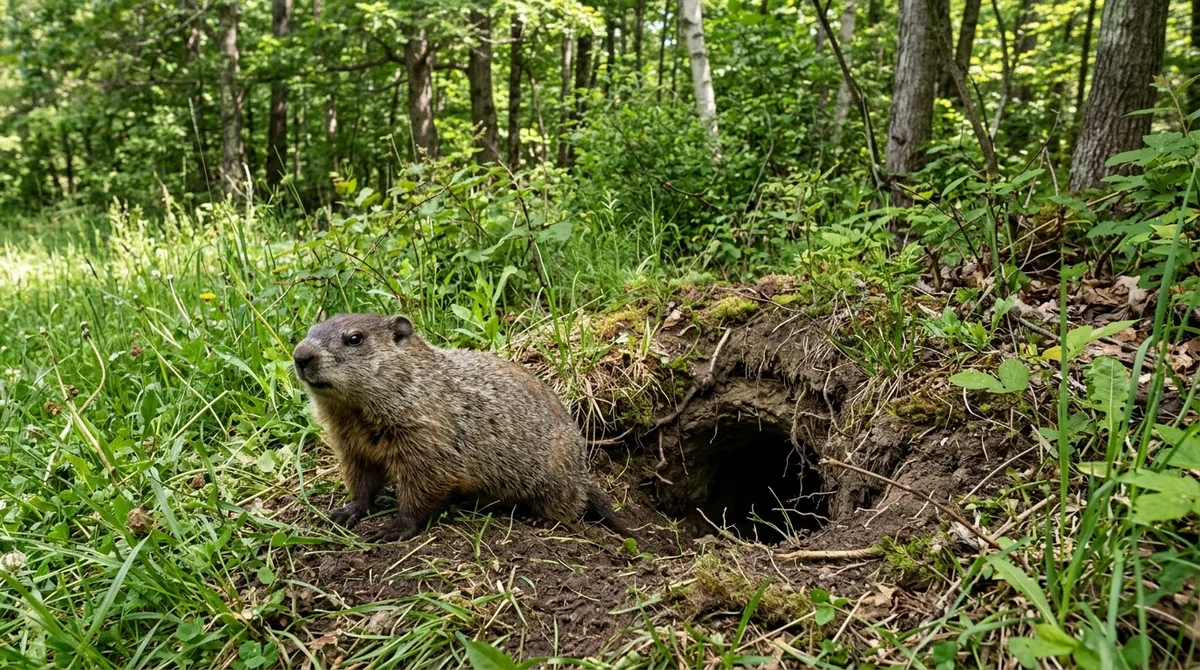
Groundhogs use underground burrows and often occupy places where open feeding areas meet cover.
Penn State Extension explains that woodchucks commonly stay relatively close to their dens, where they can retreat when threatened.
That connection helps explain repeated visits to the same part of a yard. Food and nearby shelter may both be part of the picture.
Their burrows also have a wider ecological role. Penn State notes that abandoned burrows can provide cover for other wildlife.
Before interfering with an opening, remember that a burrow’s current occupant may not be the animal that originally dug it.
Should You Feed a Wild Groundhog?
Use this article to understand wildlife rather than to create a feeding station.
If you want fewer groundhog visits to a garden, deliberately leaving out food works against that goal. Michigan’s Department of Natural Resources recommends promptly harvesting produce and collecting fallen fruit to reduce attraction.
Watching from a distance is a better fit for a wildlife-friendly garden than trying to make a groundhog approach you.
For advice about an injured animal or a persistent conflict, contact an appropriate local wildlife professional. Handling and relocation rules vary, so this guide does not provide trapping or relocation instructions.
How to Protect Your Garden From Groundhogs
Start With a Physical Barrier
Penn State identifies fencing as a useful way to protect home gardens.
The details matter because groundhogs dig. Before installing a barrier, consult a local extension service’s guidance for the design and below-ground protection appropriate to your situation.
A decorative fence with open space underneath may not serve the purpose you need.
Harvest Promptly
Pick ready produce, which is exactly what do groundhogs eat, and collect fallen fruit rather than leaving it around the garden.
Make this part of the normal garden routine. It is a practical step supported by Michigan’s wildlife guidance, even though it does not guarantee that every animal will stop visiting.
Check What Is Actually Happening
Before making changes, note where plants are being damaged and when you see the animal.
Photographs taken from a safe distance can help when asking an extension service or wildlife professional for advice.
Avoid blocking an occupied burrow or taking action based only on a hole you found. Get local guidance where an animal may be living beneath a building or other structure.
A Simple Garden Observation Checklist
Before deciding what to do, ask:
- Have I actually seen a groundhog?
- Which plants are being eaten?
- Is there an opening beneath the garden fence?
- Is fallen fruit or unharvested produce available?
- Is there a burrow nearby that needs professional assessment?
You do not need to answer every question immediately. Even a few clear observations make it easier to choose a proportionate response.
Frequently Asked Questions
What do groundhogs eat most often?
Their diet consists mainly of vegetation, including grasses, clover, other leafy plants, and available crops. The exact mix changes with the season and local food supply.
Do groundhogs eat tomatoes?
University of Maryland Extension identifies tomatoes as one of the garden foods groundhogs enjoy. Protecting access to the planting area is more useful than assuming a particular vegetable will be ignored.
Do groundhogs eat fruit?
Yes. Wildlife guidance lists fruit among their foods, including apples and pears. Collecting fallen fruit can help reduce food available around a garden.
What is a groundhog’s favorite food?
There is no single favorite that applies to every groundhog. Rutgers describes food choices as varying with availability, season, and individual preference.
Do groundhogs eat during winter?
During hibernation they rely on stored fat rather than following their active-season feeding routine. Exact seasonal timing depends on location and conditions.
Does seeing a groundhog mean my whole garden will be ruined?
A sighting alone does not tell you how much damage will occur. Check for actual feeding activity, monitor accessible plants, and use appropriate garden protection.
Understanding the Visitor in Your Yard
To conclude what do groundhogs eat: they consume what their surroundings make available, mainly leafy plants, grasses, crops, and seasonal fruit.
Once you connect those food choices with access to shelter, their visits become easier to understand. Protect the plants you value, reduce easy food sources, and seek local advice when a burrow or persistent problem needs closer attention.
Read next
#Groundhogs #GroundhogDiet #Woodchucks #WildlifeFacts #BackyardWildlife #CurioPatch
Sources and further reading
- Rutgers University — Ecology and Management of the Groundhog
- U.S. Fish & Wildlife Service — Fun Facts About Groundhogs
- Missouri Department of Conservation — Woodchuck
- Penn State Extension — Woodchucks
- University of Maryland Extension — Groundhogs
- Pennsylvania Game Commission — Woodchuck
- Michigan DNR — Groundhog
- National Geographic — Groundhog