
Table of Contents
Table of Contents
Dolphin life is more than a quick leap above the waves. What do they eat, where do they live, and how do they rest? Understanding these marine mammals starts with looking beneath the surface.
What is it eating below the surface? Is it traveling alone or keeping pace with a group? And does slow swimming mean it is resting?
The answers depend partly on the species. The name describes a range of animals, so one familiar image cannot tell the whole story.
This guide explores their food, habitats, and behavior, with examples from bottlenose and spinner marine mammals. It also explains how to enjoy a sighting without getting in the animal’s way.
Is a Dolphin a Fish or a Mammal?
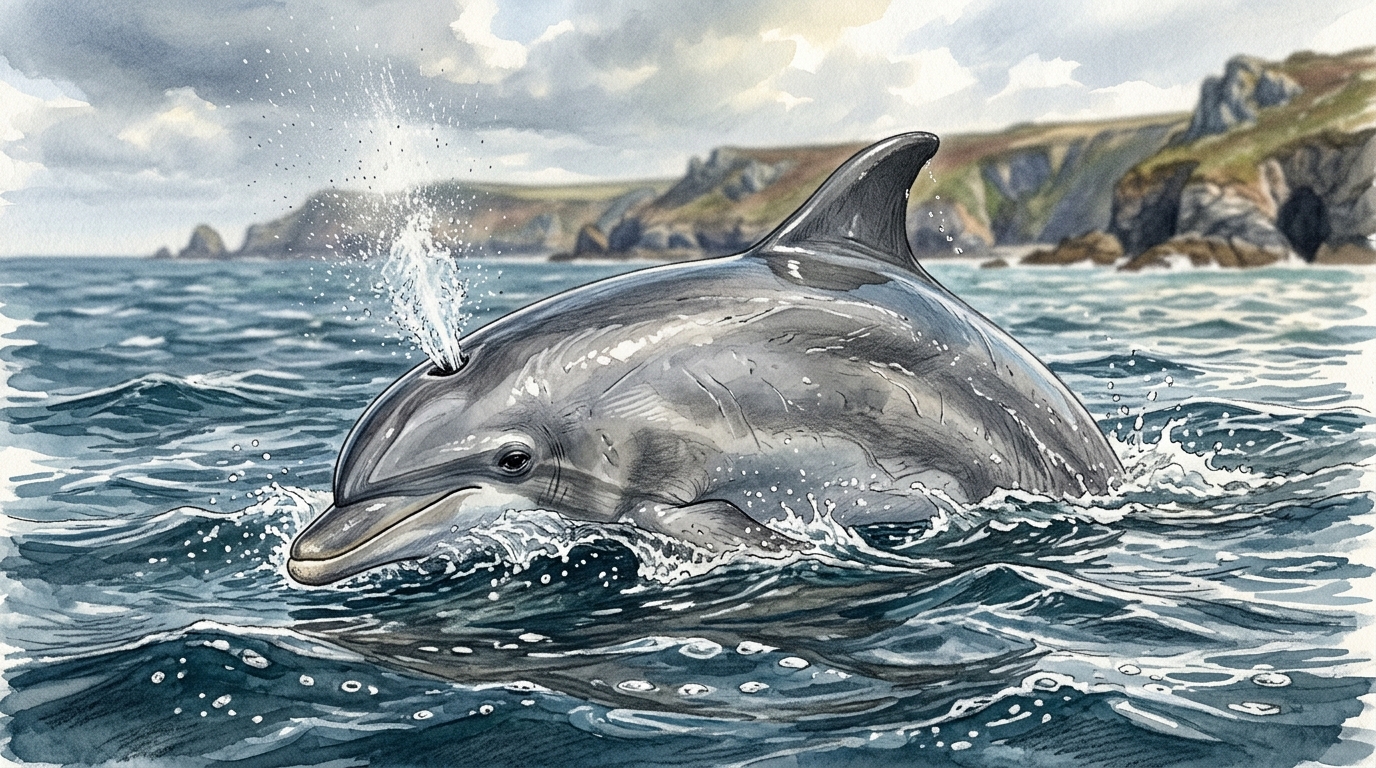
This animal is a mammal.
They breathe air with lungs, and mothers produce milk for their young. Their streamlined bodies suit life in water, but that does not make them fish.
NOAA’s National Ocean Service explains this distinction in its guide to marine mammal biology. Remembering it helps make sense of a basic part of their behavior: returning to the surface to breathe.
A brief surface appearance is therefore only a small part of what you are watching. The animal is moving between the underwater environment where it spends much of its time and the air it needs above it.
What Do They Eat?
Diet varies by species and habitat.
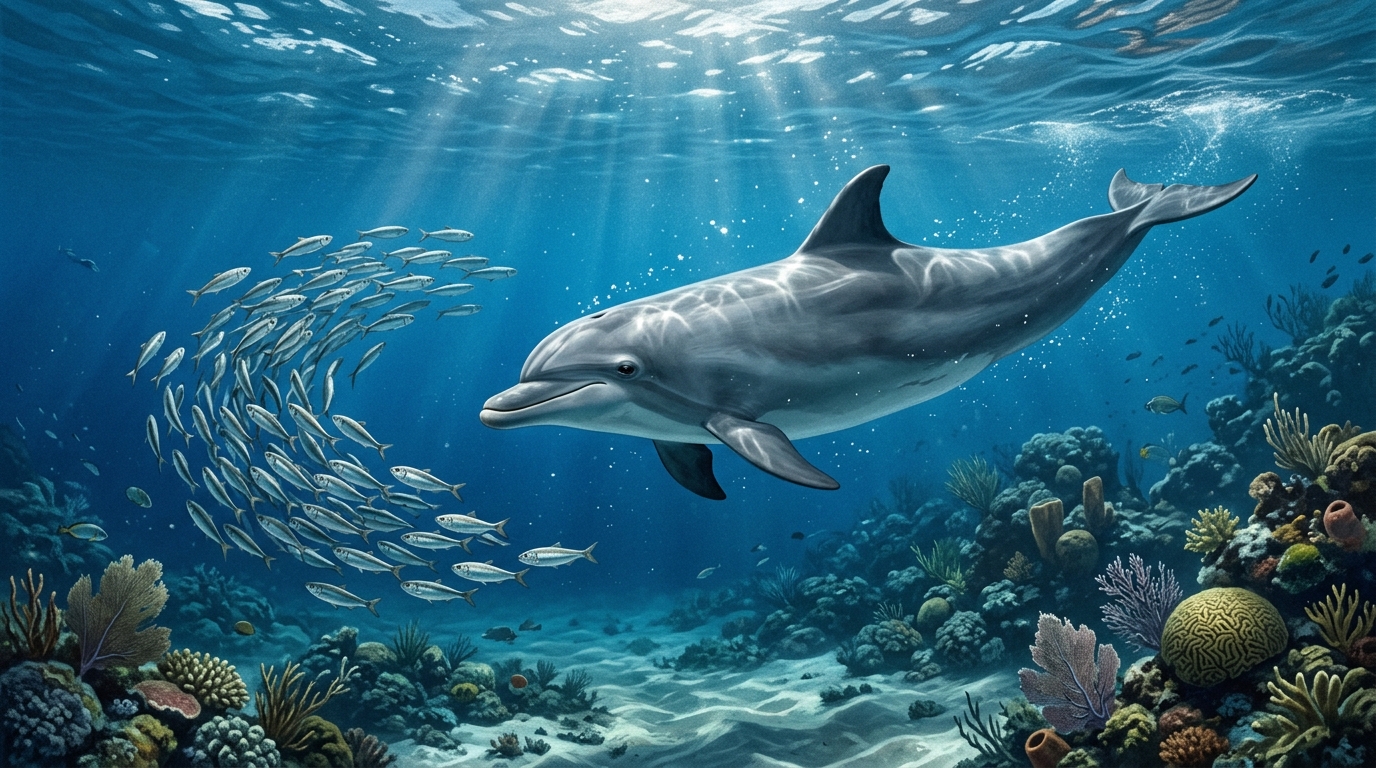
These bottlenose marine mammals eat prey including fish, squid, and crustaceans. NOAA describes them hunting both individually and cooperatively, sometimes gathering fish together before feeding.
These spinner mammals provide a different example. They feed at night on small fish, squid, and shrimp, taking advantage of prey moving closer to the surface after dark.
The useful answer is therefore more specific than “they eat fish.” Their feeding routines depend on the animal and the prey available.
Where Do They Live?
These bottlenose marine mammals inhabit tropical and temperate waters. Their habitats include bays, estuaries, coastal waters, and areas farther offshore.
That variety matters. An animal seen near a harbor and one observed in open water may be using very different surroundings.
For any sighting, location is a useful starting point for identification. Note the region, whether the water is nearshore or offshore, and any markings you can see from a respectful distance.
You do not need to identify the species immediately to enjoy watching it.
How Does This Animal Find Food Underwater?
Sound is part of the story.
NOAA describes bottlenose species using listening and high-frequency echolocation to locate prey. Echolocation involves producing sounds and using returning echoes to gather information.
It is tempting to call this a superpower, but the more interesting point is practical: an underwater hunter has ways of obtaining information beyond what a person can see from a boat.
If you watch one surface and disappear again, you are seeing only a fragment of its search through the surrounding water.
How Do They Rest?
Rest does not always look like an animal lying motionless.
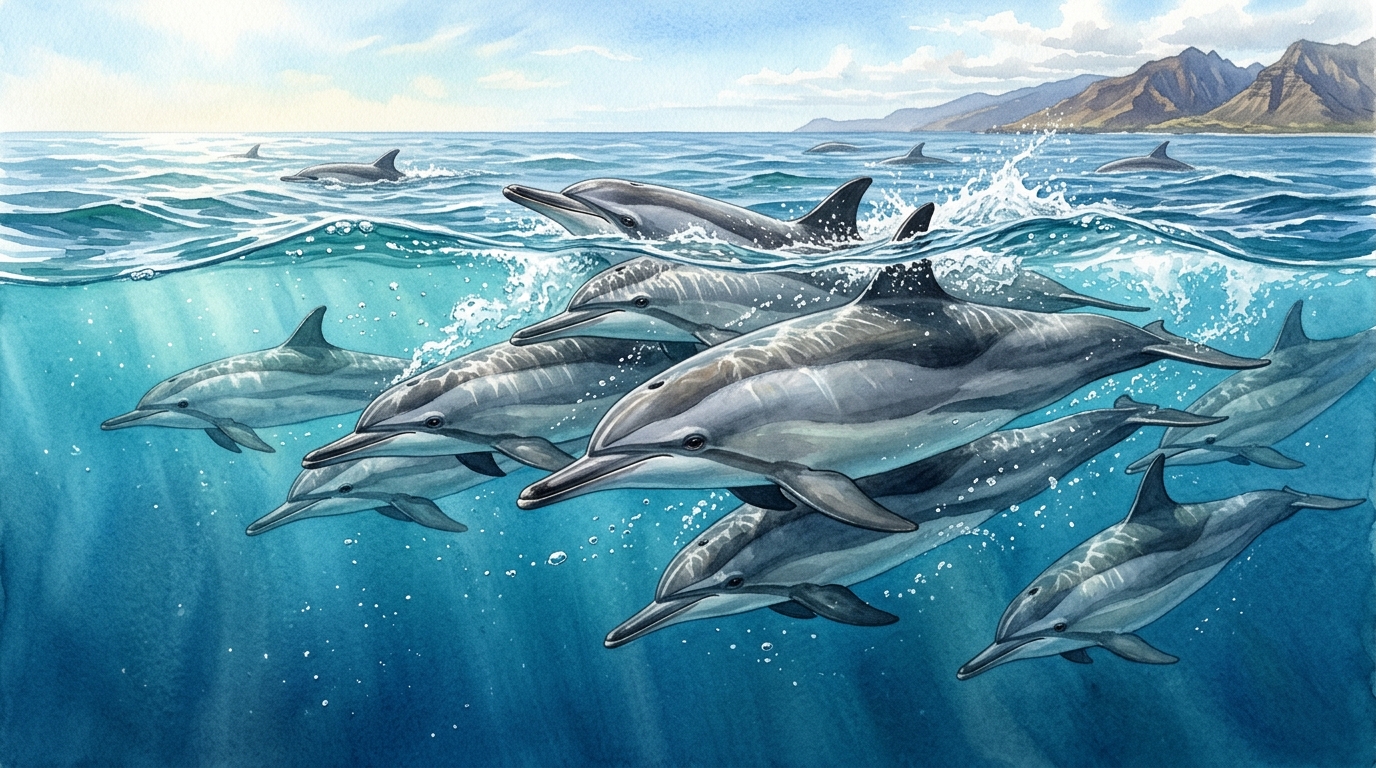
NOAA describes resting spinner groups moving slowly together in close formation. Their daytime resting behavior contrasts with their night-time feeding activity.
This is an important detail for wildlife watching. A quietly moving group may be resting rather than inviting a closer approach.
How to Watch Wild Marine Mammals Responsibly
Before a coastal trip, read the wildlife-viewing guidance for the location and species you may encounter. Requirements and recommended distances can differ.
NOAA recommends observing without feeding, touching, chasing, or attempting to swim with wild marine mammals.
Read Next
- The Science-Backed Guide to Puppy Socialization
- Calm Departures: A Step-by-Step Desensitization Blueprint for Dog Separation Anxiety
- Why Do Cats Purr? Feline Vibrations
#Dolphin #DolphinFacts #MarineLife #OceanWildlife #WildlifeEducation #CurioPatch
Sources and further reading
- NOAA — Are they fish?
- NOAA Fisheries — Common Bottlenose Marine Mammal
- NOAA Fisheries — Spinner Marine Mammal
- NOAA — These animals and porpoises
- NOAA Fisheries — Protect Wild Marine Mammals
- NOAA Fisheries — Marine Life Viewing Guidelines