Returning home to shredded doorframes, puddle-stained carpets, or frantic neighbor complaints about hours of mournful howling is heartbreaking. Yet guardians must understand: a dog with separation anxiety is not being spiteful or vengeful—they are experiencing an overwhelming, paralyzing panic attack.
When their attachment figure disappears, their brain perceives isolation as a life-threatening crisis. Curing this condition requires resetting their autonomic nervous system through gentle, systematic desensitization.
Phase 1: Uncoupling Pre-Departure Cues
Dogs are world-class pattern recognition machines. Long before your foot crosses the front threshold, your dog’s heart rate has already doubled because they registered the sequence: picking up car keys, slipping on work boots, zipping a jacket, and grabbing a tote bag.
To break this anticipatory anxiety cycle, perform these actions without leaving:
- Pick up your keys, walk to the sofa, sit down for three minutes, and put them back.
- Put on your heavy winter coat, brew a cup of herbal tea, and read a magazine.
- Turn the deadbolt lock and walk back into the kitchen to prepare dinner.
When you repeat these cues 8 to 12 times throughout the week without an actual departure, the items lose their predictive emotional weight.
Phase 2: Sub-Threshold Departure Training
The single most important rule of separation anxiety rehabilitation is never allow the dog to enter full panic. If your dog begins pacing at 30 seconds of alone time, your starting training interval is 10 seconds.
- Step outside the front door, close it softly, pause for 5 seconds, and step back inside.
- Do not greet your dog with emotional fanfare. Simply walk in, resume your routine, and keep the energy serene and grounding.
- Gradually increase the duration: 15 seconds, 30 seconds, 1 minute, 45 seconds (interspersing shorter “easy” reps prevents burnout), and 2 minutes.
- Use a cheap home security camera or old tablet running a pet monitor app to observe your dog’s eyes and body language in real time.
Creating a Soothing Environment
Set the stage for emotional safety before starting your departure training:
- Acoustic White Noise: Play a dedicated canine sound therapy playlist or brown noise machine to mask exterior hallway noises or street traffic.
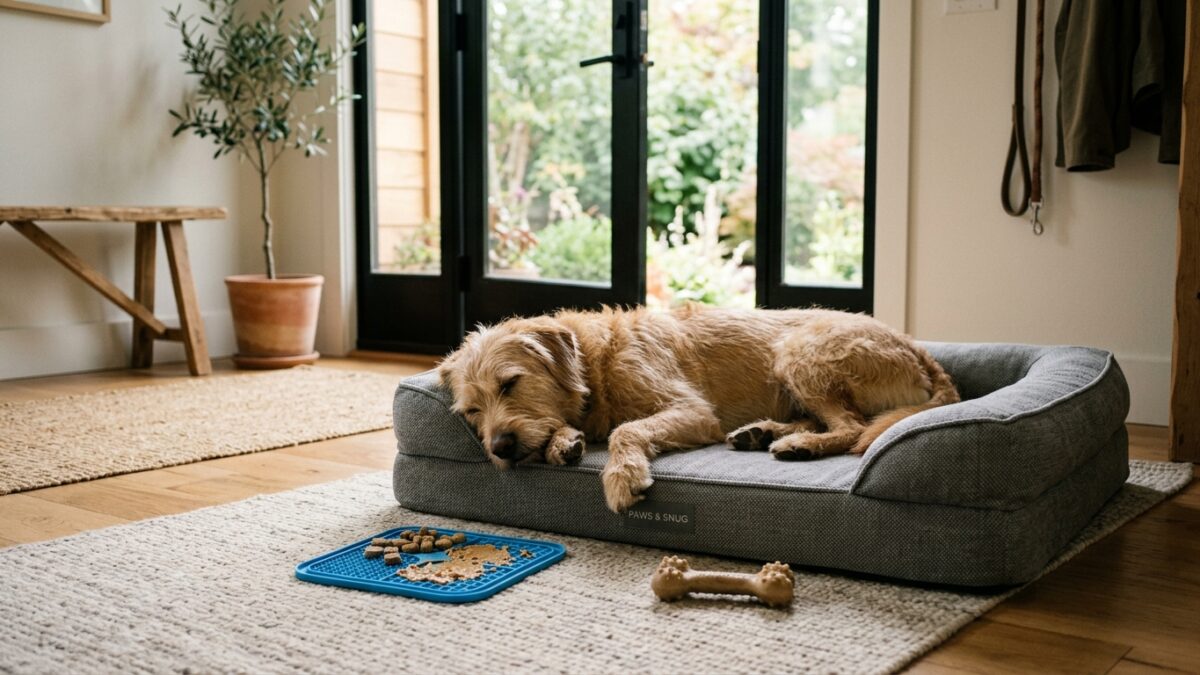
- Licking & Sniffing Enrichment: Licking stimulates the vagus nerve and triggers soothing neurochemicals. Offer a silicone mat smeared with plain pumpkin puree, wet food, or unsweetened Greek yogurt frozen solid.
- Scent Anchors: Leave an unwashed t-shirt you wore during sleep in their resting crate or bed so your scent remains reassuringly present.
Progress with separation anxiety is rarely linear, but with consistent patience and sub-threshold steps, your dog will learn that every goodbye is followed by a guaranteed, peaceful return.