Most kitchen frustration does not stem from a lack of square footage; it stems from a lack of visual inventory. When dry goods, spices, and cans disappear into cavernous, unorganized cupboards, we inevitably buy duplicates and allow forgotten food to quietly expire.
By shifting from chaotic stacking to a zoned architectural system, you can triple the usable capacity of even the smallest apartment pantry while radically streamlining your weeknight dinner prep.
The 5 Core Pantry Zones
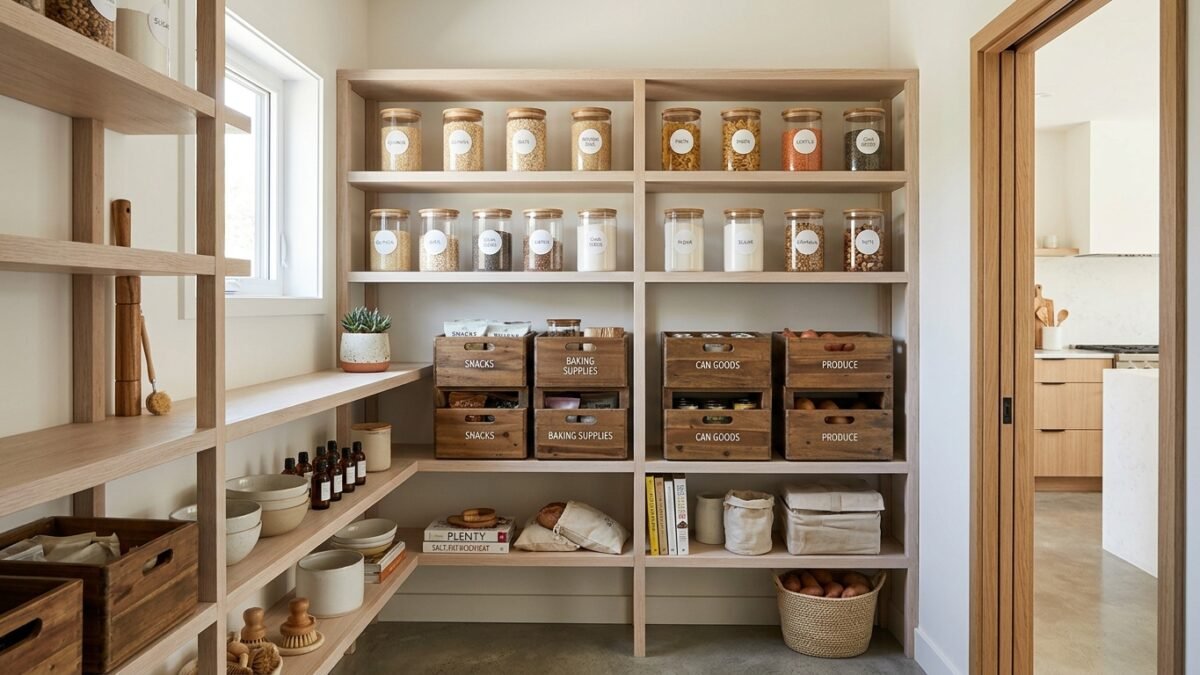
Organize pantry real estate according to how your household actually cooks rather than random size grouping:
1. Eye-Level Prime Real Estate: Quick Daily Staples
Reserve shelves situated between chest height and eye level for your daily drivers: breakfast cereals, rolled oats, nut butters, everyday cooking oils, and coffee or tea supplies. These items are reached for multiple times a day and should require zero shifting of other items.
2. The Cooking & Simmer Zone (Cans, Pastas, Legumes)
Place canned tomatoes, coconut milk, dried beans, pasta, and broths on the middle shelf. Use 3-tiered acrylic can risers so that every single label remains visible at a glance, preventing the dreaded “can graveyard” at the back of the shelf.
3. The Baking & Flour Locker
Flour, sugars, baking soda, cocoa powder, and nuts belong in airtight square containers. Square containers fit flush against each other, reclaiming up to 25% more footprint than traditional circular jars.
4. The Grab-and-Go Snack Hub
Place healthy snacks, dried fruit, crackers, and granola bars in low-sided open wire baskets. If you have children, placing this bin on lower shelves encourages independence and stops kids from rummaging through cooking ingredients.
5. The Deep Base: Bulk and Overstock
The pantry floor or bottom shelf should support heavy items: gallons of vinegar, spare olive oil tins, unopened paper towel rolls, and potatoes or onions stored in breathable ventilated wooden crates (never store onions and potatoes together, as ethylene gas accelerates sprouting).
The Golden “Eat Me First” Basket
Place a small, brightly labeled bin on your central shelf designated for snacks with open bags, canned beans expiring this month, or half-used boxes of couscous. Train everyone in the household to check this bin before opening anything new. This single habit eliminates the majority of household pantry waste.