Keeping cats indoors dramatically extends their life expectancy by shielding them from traffic, toxins, and territorial conflicts. However, an unstimulating indoor environment can lead to chronic stress, obesity, and destructive behaviors.
Cats are obligate carnivores with intact predatory instincts. To keep an indoor cat truly content, we must design an indoor ecosystem that satisfies their fundamental biological drives: climbing, surveying territory, stalking, and foraging.
The Five Pillars of Healthy Feline Environment
The American Association of Feline Practitioners (AAFP) outlines five core environmental needs for cats. Enrichment is not just about fun; it is preventive behavioral healthcare.
1. Vertical Territory and Safe Vantage Points
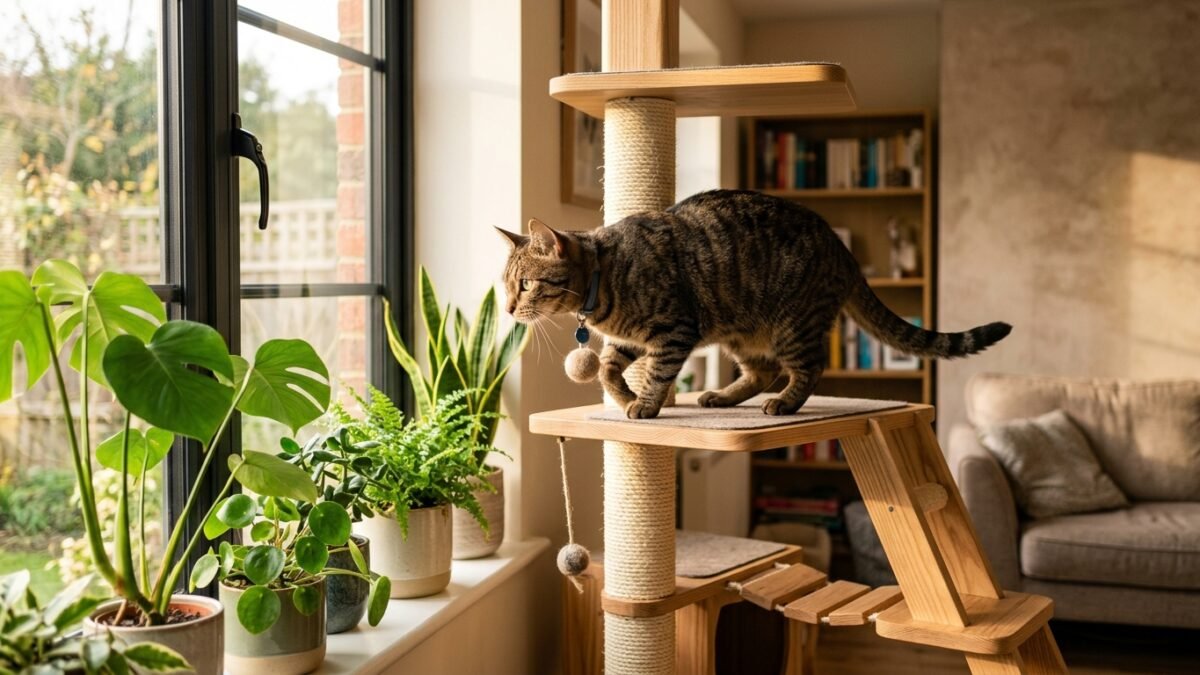
Cats are both predators and prey in evolutionary terms. High perches give them an undeniable sense of security and allow multiple cats in a household to share square footage without territorial tension. Look for tall cat trees that provide sightlines over windows and living spaces.
2. The Predatory Sequence: Stalk, Chase, Pounce, Catch
Laser pointers can be frustrating for cats because they cannot physically catch the beam, which can lead to displacement scratching. Use wand toys with feathers or leather strips, moving them away from the cat rather than waving them in their face. Always end the session with a tangible “catch” and a protein snack.
3. Foraging Instead of Free-Feeding
In nature, a feral cat spends up to 6 hours daily hunting multiple small meals. Free-feeding dry kibble in a static bowl eliminates this mental engagement. Replace bowls with puzzle feeders, maze boards, or paper toilet rolls filled with dry food that your cat must manipulate to access.
Daily Enrichment Schedule
Consistency creates confidence for indoor cats. Dedicate 15 minutes before breakfast and 15 minutes before bedtime for structured wand play followed by meals. This aligns with the natural feline circadian cycle: hunt, eat, groom, and sleep.