Search for “zero-waste kitchen” online, and you will quickly see curated photos of matching bamboo containers, linen bread bags, and designer compost bins. The irony is unmistakable: sustainability has been repackaged as a shopping category.
True waste reduction is unglamorous, practical, and saves money. It is not about buying new eco-products; it is about consuming what you already have and making small, sustainable adjustments to how you store, cook, and preserve food.
1. The “Eat Me First” Refrigerator Box
The single most effective tool in our kitchen costs zero dollars: a clear shoebox or plastic bin placed on the eye-level shelf of your refrigerator labeled “Eat Me First.”
Whenever you have half an onion, lingering herbs, leftover roasted vegetables, or yogurt nearing its date, place it directly in this bin. Before you cook dinner or pack lunch, your rule is to inspect this box first. This simple visual cue eliminates over 60% of accidental vegetable spoilage.
2. Proper Produce Storage Physics
Most produce spoils prematurely because it is stored improperly. Different foods need fundamentally different atmospheric conditions:
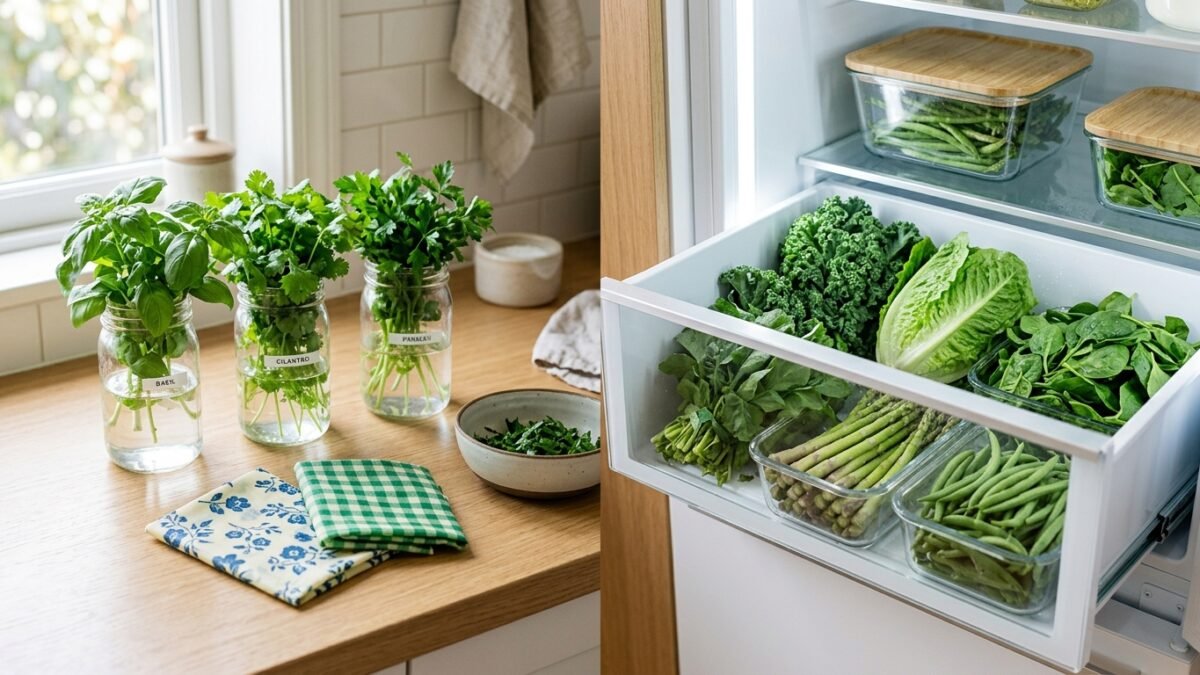
- Leafy Greens: Moisture is both friend and foe. Wash your greens, spin them dry, and store them in an airtight container with a dry tea towel. The towel absorbs condensation while keeping the humidity optimal.
- Herbs: Treat fresh parsley, cilantro, and basil like flowers. Trim the stem ends and stand them upright in a jar with an inch of fresh water.
- Ethylene Gas Separators: Never store apples, bananas, or tomatoes directly next to leafy greens or potatoes; the ethylene gas emitted will accelerate rotting.
3. The Freezer Scrap Broth Bag
Keep a reusable silicone bag or sturdy plastic container in your freezer door. Whenever you peel carrots, chop celery ends, remove onion skins, or trim herb stems, drop those clean scraps directly into the freezer bag.
When the bag is full, simmer the contents in water with a bay leaf and peppercorns for 45 minutes, strain, and you have rich, flavorful vegetable broth for zero extra cost.